HOA & POA Fees in Bluffton and Hilton Head Island: A Complete Guide for Buyers and Sellers

HOA, POA, and Regime Fees in Bluffton and Hilton Head Island: A Complete Guide for Buyers and Sellers (2026)
Whether you're buying a gated golf retreat in Bluffton or a beachside villa on Hilton Head Island, HOA, POA, or regime fees are almost certain to be part of the deal.
Understanding exactly what these fees are, what they cover, and who pays them can mean the difference between a smooth closing and an expensive surprise.
The Lowcountry real estate market is home to some of the most amenity-rich planned communities in the Southeast — from the iconic Sea Pines Resort on Hilton Head Island, home to the legendary Harbour Town Golf Links, to the sprawling Palmetto Bluff sanctuary in Bluffton. From Sun City Hilton Head's 55+ active adult village to the ultra-private enclave of Spring Island, world-class amenities come with community associations — and community associations come with fees that affect both buyers and sellers at closing and beyond.
This guide breaks down every category of HOA and POA fee you're likely to encounter in the Bluffton and Hilton Head market, explains who typically pays them according to the SC REALTORS® SCR310 contract, and gives you the community-specific context you need to negotiate with confidence.
Quick Answer: What Are HOA, POA, and Regime Fees?
| Term | What It Covers | Who It Applies To |
|---|---|---|
| HOA | Shared infrastructure, common areas, amenities in a subdivision | All homeowners in that community |
| POA | Larger planned or gated communities; roads, security, open space | All property owners in that community |
| Regime | Building insurance, exterior, elevators, shared systems | Condo and villa owners |
In many Lowcountry communities, buyers encounter more than one of these fee layers simultaneously — particularly villa buyers, who may owe both a master POA fee and a separate regime fee.
Table of Contents
- What Do HOA, POA, and Regime Mean in the Lowcountry?
- What Types of Fees Will I Pay at Closing?
- Who Pays HOA Transfer Fees — Buyer or Seller?
- What Are Condo Regime Fees on Hilton Head Island?
- How Do HOA Fees Affect Mortgage Qualification?
- What Are the Warning Signs of a Poorly Managed HOA?
- Buyer Due-Diligence Checklist
- What Do Sellers Need to Know About HOA Fees?
- Three Practical Lowcountry Examples
- How to Compare the True Cost of Ownership
- FAQ: HOA and POA Fees in Bluffton and Hilton Head
What Do HOA, POA, and Regime Mean in the Lowcountry? {#definitions}
Buying a home in Bluffton or Hilton Head Island often means choosing more than a house. You may also be choosing a gated community, private roads, security, recreation, landscaping, a marina, golf, beach access, or a shared building. Those benefits can come with several layers of recurring and one-time fees — and Lowcountry communities do not all use the same terminology or fee structure.
What Is a Homeowners Association (HOA) in Bluffton, SC?
An HOA governs a subdivision or planned community and collects dues to maintain shared infrastructure: roads, landscaping, common areas, and amenities like pools, fitness centers, and clubhouses. Membership is mandatory when you purchase within the community. Smaller Bluffton neighborhoods like Sawmill Creek, Pine Ridge, and Woodbridge typically operate under straightforward HOA structures with modest annual dues.
The name alone does not establish what the association is responsible for. The community's declaration, covenants, bylaws, rules, budget, and fee schedule control. Under the South Carolina Homeowners Association Act, enforceable governing documents generally must meet state recording requirements.
What Is a Property Owners Association (POA) on Hilton Head Island?
A POA is frequently used for a larger planned or gated Lowcountry community. A POA may maintain roads, security, amenities, open space, and architectural standards. In practice, HOA and POA responsibilities vary by community — buyers should focus on the recorded documents and current financial information rather than the label.
What Is a Condominium or Villa Regime Fee?
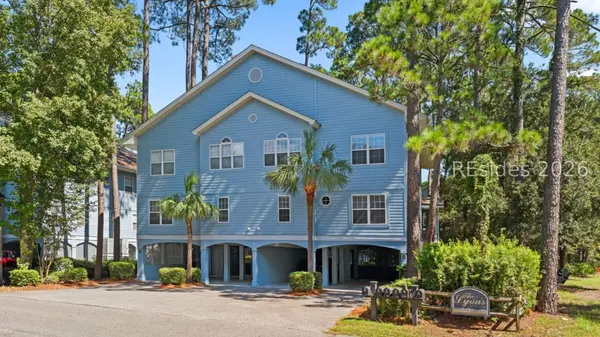
If you're buying a villa or condominium — particularly on Hilton Head Island in communities like Palmetto Dunes, Shipyard Plantation, or Shelter Cove — you'll likely encounter regime fees. Regime fees cover building insurance for common areas, exterior maintenance, elevators, management, common utilities, and reserves. Think of them as an HOA for the building itself, stacked on top of any community POA fees — what experts call a "fee stack."
A villa can therefore carry two recurring layers:
- A master-community POA fee; and
- A separate building or villa regime fee.
For example, a villa may contribute to community roads, security, and amenities through the POA, while paying a separate regime for the roof, exterior, master insurance, and shared-building expenses. Buyers need to review both sets of documents and budgets.
The safest approach: Examine the complete cost of ownership for the specific property rather than relying on a community average or an older online fee chart.
What Types of HOA and POA Fees Will Buyers and Sellers Encounter? {#fee-types}
1. Regular HOA, POA, or Regime Dues
These recurring assessments may be billed monthly, quarterly, semiannually, or annually. What they cover varies widely. A lower fee is not automatically a better value, and a higher fee is not automatically excessive. The meaningful comparison is what the fee funds, what remains the owner's responsibility, and whether the association has adequate insurance and reserves.
Fees can change during the year and may vary by property type, neighborhood, phase, lot status, or membership level. Online summaries can be useful for preliminary research, but they are not closing statements. Verify every amount directly with the association, regime, club, management company, and South Carolina closing attorney.
2. HOA Transfer, Enhancement, or Resale Charges
A one-time charge typically becomes due when ownership changes. Associations use different names, including transfer fee, enhancement fee, resale fee, conservancy fee, or initiation assessment. The charge may be a flat amount, a percentage of the sales price, or a multiple of regular dues.
Who pays should not be assumed from the label or local custom. The parties should identify each charge and allocate it clearly in the signed purchase agreement. South Carolina REALTORS® guidance regarding the SCR310 contract explains that association transfer charges are addressed through the contract and may be allocated between buyer and seller.
Illustration: If a community charge is 0.50% of a $600,000 purchase price, that charge would be $3,000. A separate $250 administrative fee would bring the one-time association charges to $3,250 before any club or regime costs. This is only an illustration; the property's verified fee schedule controls.
Hilton Head buyers should also ask the closing attorney whether any separate municipal transfer-related charge applies. A government charge is not the same as a community POA transfer fee.
3. Capital Contribution or Working-Capital Fee
A buyer may be asked to make a one-time contribution at closing. Depending on the community's governing documents and accounting, the funds may support reserves, daily operations, improvements, or future community needs.
Because communities may use "capital contribution," "working capital," and "enhancement fee" differently, request written confirmation of:
- The exact amount or calculation;
- The due date;
- Whether it is refundable or transferable;
- The purpose or account it supports; and
- Which party is obligated to pay under the governing documents and contract.
Lender note: Do not assume that a seller-paid association charge will automatically be acceptable to the buyer's lender. Seller concessions and other interested-party contributions must satisfy the loan program, underwriting requirements, and closing disclosures. Confirm the proposed treatment with the lender and closing attorney.
4. Private-Club Initiation Fees and Annual Costs
In many Lowcountry golf and lifestyle communities, the club and the owners association are separate entities. A property may involve:
- Mandatory or optional membership;
- A one-time initiation fee;
- Annual club dues or capital charges;
- Food-and-beverage minimums;
- Golf, trail, cart, locker, marina, or activity fees; and
- Multiple membership levels with different privileges.
A listing can state POA dues correctly yet still fail to communicate the full cost of a mandatory club membership. Before making an offer, determine whether membership is mandatory, which level is available, whether a membership or certificate transfers, and whether the club has approved or announced a fee change.
Illustration: A property could have $3,000 in annual POA dues, a separate $12,000 annual club obligation, and a $50,000 one-time initiation charge. Looking only at the POA line would materially understate the cost of ownership. Actual amounts must be verified for the property and membership category.
5. Special Assessments
A special assessment is an additional charge for a major repair, insurance shortfall, storm recovery, capital project, or other expense not fully covered by the regular budget and reserves.
The date an assessment was first discussed is not necessarily the date it was formally approved or became payable. Buyers and sellers should obtain written confirmation of:
- Assessments already approved;
- Installments paid and balances outstanding;
- Proposed projects or assessments discussed in meeting minutes;
- Whether a balance may be paid at closing; and
- How the purchase agreement allocates the obligation.
The signed contract and governing documents control the transaction. The parties should review the applicable language with their real estate advisor and closing attorney rather than relying on a generalized "buyer pays" or "seller pays" rule.
6. Resale, Estoppel, and Document Fees
An association or management company may charge for account statements, governing documents, questionnaires, resale packages, or expedited processing. These materials may reveal unpaid dues, violations, assessments, and property-specific obligations.
Request them early. The governing documents, purchase agreement, and closing attorney's instructions should be checked to determine the required documents, timing, and responsibility for the cost.
7. Architectural-Review, Construction, and Neighborhood Fees
Vacant lots, new construction, renovations, and some resale homes may be subject to architectural-review fees, refundable construction deposits, road-impact fees, compliance inspections, or neighborhood-level assessments in addition to master-community dues.
Buyers planning a pool, fence, addition, exterior color change, or major landscaping project should review the architectural standards before closing. A similar improvement elsewhere in the community does not guarantee approval for a particular property.
Who Pays HOA Transfer Fees — Buyer or Seller in South Carolina? {#who-pays}
There is no universal rule. Under South Carolina practice and the SCR310 purchase contract, transfer fees, capital contributions, and similar one-time association charges are negotiable between buyer and seller. Allocation should be stated explicitly in the signed purchase agreement — never assumed from local custom or the name of the charge.
Every charge should be identified, calculated using the verified fee schedule, and assigned in the contract before closing.
What Are Condo Regime Fees on Hilton Head Island — and What Do They Cover? {#regime-fees}
Regime fees commonly pay for some combination of:
- Master building insurance for covered common elements;
- Roof and exterior maintenance;
- Painting and common-area repairs;
- Elevators and shared mechanical systems;
- Pools, fitness areas, and other shared amenities;
- Landscaping and irrigation;
- Management;
- Common-area utilities; and
- Reserve contributions.
Coverage varies. Regime dues do not necessarily replace the owner's individual condominium policy, commonly called an HO-6 policy. Villa buyers should compare the master policy with the coverage recommended by a licensed insurance professional and pay close attention to exclusions, wind and flood exposure, deductibles, loss-assessment coverage, and how a large deductible may be allocated among owners.
How Do HOA and Regime Fees Affect Mortgage Qualification? {#mortgage}
Association charges are not merely lifestyle expenses — they directly affect what a lender will approve. The Consumer Financial Protection Bureau's official commentary on ability-to-repay standards addresses mortgage-related obligations that can include homeowners or condominium association charges. Fannie Mae's monthly housing expense guidance includes owners-association dues and applicable special assessments in the subject property's monthly housing expense.
Simple illustration:
| Expense | Monthly Amount |
|---|---|
| Principal and interest | $2,400 |
| Property taxes and insurance | $900 |
| POA and regime dues | $700 |
| Total housing expense (before utilities and maintenance) | $4,000 |
The lender — not the real estate advisor — determines how verified obligations affect qualification. Buyers should provide accurate fee information early, especially for a villa, condominium, or property with a mandatory club component.
Condominium financing can also depend on the financial and physical condition of the entire project. A lender may review delinquencies, insurance, reserves, litigation, critical repairs, and special assessments. Fannie Mae's condominium project standards explain why approval involves more than the borrower and individual unit.
What Are the Warning Signs of a Poorly Managed HOA or POA? {#warning-signs}
No single factor proves that an association is poorly managed, but the following conditions deserve closer review:
- No recent reserve study, or no reserve study at all;
- Repeated special assessments;
- Significant owner delinquencies;
- Major repairs without a clear funding plan;
- Large insurance deductibles, exclusions, or coverage gaps;
- Pending litigation or unresolved construction-defect claims;
- Sharp budget increases or persistent operating deficits;
- Meeting minutes that discuss projects not reflected in the current budget; or
- Transfer charges payable to a private third party rather than used for the association's community purposes.
Avoid relying on a universal reserve-funding percentage as a pass-or-fail test. Reserve needs depend on the association's components, useful-life estimates, insurance, maintenance plan, and future projects. Buyers should ask qualified legal, accounting, insurance, and inspection professionals to evaluate issues that fall within their expertise.
Buyer Due-Diligence Checklist for HOA and POA Properties {#buyer-checklist}
Before the applicable due-diligence or document-review deadline expires, request and review the materials relevant to the property:
- Current dues and a complete written fee schedule;
- Master-association, sub-association, and regime charges;
- Current operating budget and recent financial statements;
- The latest reserve study, if available;
- Recent board and member meeting minutes;
- Approved, pending, or discussed assessments and major projects;
- Master insurance declarations, limits, exclusions, and deductibles;
- Declarations, covenants, bylaws, rules, and recorded amendments;
- Rental, pet, parking, vehicle, and architectural restrictions;
- Pending litigation, major repairs, and insurance claims;
- Delinquency information available for lender review;
- Club membership requirements and the current club fee schedule; and
- A property-specific resale, estoppel, or account statement.
South Carolina's Residential Property Condition Disclosure Act generally requires an applicable seller to provide the state's disclosure statement unless an exemption applies, and the form addresses whether a property is subject to HOA governance and associated obligations. That disclosure does not replace the buyer's independent review of association, regime, insurance, and club documents.
Do HOA Rules Affect Short-Term Rentals on Hilton Head Island?
Yes — rental buyers need two separate answers. If rental income is part of the plan, verify both:
- Whether the association, regime, and recorded covenants permit the intended rental; and
- Whether the town or county permits and regulates that use.
For rentals of less than 30 days in the Town of Hilton Head Island, review the Town's current Short-Term Rental Property Owner Center for permit, business-license, safety, and operating requirements. A municipal permit does not override a private restriction, and association permission does not replace government licensing.
Do not rely solely on a listing's rental history. Regulations, private rules, and permit eligibility can change, and an existing permit may not transfer automatically to a new owner.
What Do Sellers Need to Know About HOA Fees Before Listing? {#seller-checklist}
Sellers can reduce delays and closing surprises by preparing early:
- Confirm the association account is current;
- Identify every master, neighborhood, regime, and club charge;
- Disclose known fees, violations, and assessments accurately;
- Order required resale or estoppel information on time;
- Gather current governing documents and amendments;
- Locate notices concerning budgets, insurance, and major projects;
- Confirm club membership status and transfer procedures in writing; and
- Ask the closing attorney and real estate advisor how the contract allocates each charge.
Complete, accurate information helps buyers evaluate the property and can reduce preventable disputes.
Three Practical Lowcountry HOA Fee Examples {#examples}
Example 1: A Bluffton Single-Family Home with an HOA
The home has one HOA with annual dues and a percentage-based transfer charge. The buyer and seller should calculate the charge using the proposed sales price, verify how regular dues will be prorated, obtain the current fee schedule, and state in the contract who pays the one-time charge.
Example 2: A Hilton Head Island Villa with Regime Fees
The villa has a master-community POA fee and a separate quarterly regime fee. The regime's master insurance policy carries a large deductible, and meeting minutes mention a future roof project. The buyer should obtain the insurance documents, investigate the project's status and funding, ask how deductibles or assessments may be allocated, and confirm project eligibility with the lender.
Example 3: A Private Golf Community in the Lowcountry
The listing shows the POA dues, but ownership also requires club membership. The buyer should obtain the membership agreement and current fee schedule directly from the club, verify initiation and annual charges, understand any minimum spending requirement, and confirm whether the membership is mandatory, optional, or transferable.
How to Compare the True Cost of Homeownership in Bluffton and Hilton Head {#total-cost}
The best Lowcountry community is not necessarily the one with the lowest HOA fee. It is the community whose location, rules, services, amenities, and long-term financial structure fit the owner's plans and budget.
Before making or accepting an offer, build a complete cost picture:
Mortgage principal and interest + property taxes + homeowners, wind, and flood insurance + HOA/POA/regime dues + club costs + assessments + utilities + maintenance
That fuller view makes it easier to compare a Bluffton single-family home, a Hilton Head villa, and a private-club property on equal terms.
FAQ: HOA and POA Fees in Bluffton and Hilton Head Island {#faq}
What is the difference between an HOA and a POA in South Carolina? Both are community associations that collect mandatory fees from property owners. "HOA" (homeowners association) is typically used for subdivisions, while "POA" (property owners association) is more common in larger planned and gated communities. In practice, the names overlap — what matters is the recorded governing documents, not the label.
What are regime fees on Hilton Head Island? Regime fees are monthly or quarterly assessments paid by condo and villa owners that cover building insurance, exterior maintenance, elevators, shared utilities, reserves, and management for the building itself. They are separate from — and in addition to — any master community POA fees.
Who pays HOA transfer fees at closing in South Carolina? There is no fixed rule. Transfer fees, enhancement fees, capital contributions, and similar one-time charges are negotiable between buyer and seller and should be allocated explicitly in the signed purchase agreement. The SCR310 contract addresses how these charges are handled.
Do HOA fees affect how much mortgage I qualify for in SC? Yes. Lenders include HOA, POA, and regime dues in your monthly housing expense when calculating debt-to-income ratios. A high combined fee load can reduce the loan amount you qualify for. Provide accurate fee information to your lender early, especially for condos or properties with mandatory club memberships.
What is a special assessment, and do I have to pay it if I just bought the home? A special assessment is a one-time or installment charge for a major expense not covered by regular dues — storm repairs, a roof replacement, a reserve shortfall. Whether a buyer or seller is responsible depends on when it was approved and what the purchase contract says. Always ask for written confirmation of all approved and pending assessments before closing.
Can I rent out my home short-term if the community allows it on Hilton Head Island? Not necessarily. Both the community's governing documents and the Town of Hilton Head Island's regulations must permit the rental. Review the Short-Term Rental Property Owner Center for current municipal requirements. Association permission and a government permit are both required — neither one replaces the other.
Are HOA fees tax deductible in South Carolina? Generally, HOA fees on a primary residence are not federal or state income tax deductible. There may be limited deductibility for investment properties or rental income situations. Consult a qualified tax advisor for guidance specific to your property and circumstances.
How do I find out the HOA fees for a specific property in Bluffton or Hilton Head? The most reliable sources are the association itself, the management company, and the property-specific resale or estoppel statement ordered through your closing attorney. Community websites and listing descriptions can be a starting point, but fees change and must be verified in writing before closing.
Questions About HOA or POA Fees on a Specific Lowcountry Property?
Community fees are highly property-specific. William "Stacy" Whitt can help you identify the right questions, gather available association information, and coordinate with your lender and South Carolina closing attorney so you can make a better-informed decision.
Call William "Stacy" Whitt at 843-726-1328 to discuss your goals and request a current, property-specific fee review.
William "Stacy" Whitt, Real Estate Advisor Engel & Völkers Bluffton | Hilton Head Island Call 843-726-1328 | Browse Listings | Sell Your Home | Visit The Lowcountry Relocation Concierge
Want a deeper look at Lowcountry communities before you decide? Watch neighborhood tours, market updates, and lifestyle guides on the Lowcountry Lifestyle Concierge YouTube channel.
Important Disclosure
This article is provided for general educational and marketing purposes only and is not legal, tax, accounting, insurance, financial, or mortgage-lending advice. It does not create an attorney-client, lender-borrower, insurance-agent, or other professional relationship. Association, regime, club, transfer, initiation, capital, assessment, and governmental fees can change without notice and may vary by property type, neighborhood, membership level, contract, closing date, and governing documents. Examples are illustrative and are not quotes, guarantees, or representations that a particular property will have the same costs.
Prospective buyers and sellers should independently verify all fees, rules, assessments, insurance information, rental eligibility, and membership requirements directly with the applicable HOA, POA, regime, club, management company, municipality, and South Carolina closing attorney before relying on them. Buyers should consult their lender regarding loan qualification, project eligibility, seller concessions, and permitted sources of funds. The signed purchase agreement and recorded governing documents control each transaction. Equal Housing Opportunity.
Information reviewed August 2026.
Categories
- All Blogs (20)
- Abbey Glen (1)
- Beach Condos (1)
- Beaufort County (5)
- Belfair Bluffton (1)
- Berkeley Hall Bluffton (1)
- Bluffton (14)
- Colleton River Bluffton (1)
- Four Seasons at Hilton Head Lakes (1)
- Four Seasons Carolina Oaks (1)
- Golf Communities (3)
- Hardeeville (14)
- Healthcare (2)
- Hilton Head Beaches (2)
- Hilton Head Festivals (1)
- Hilton Head Island (14)
- Hilton Head Island Real Estate (9)
- Hilton Head News (1)
- Hilton Head Restaurants (1)
- HOA (8)
- Jasper County (4)
- Latitude Margaritaville Hilton Head (1)
- Lowcountry Real Estate (13)
- Luxury Homes (2)
- Luxury Neighborhoods (2)
- New Riverside (2)
- Oldfield Bluffton (1)
- Open House (3)
- Palmetto Bluff Bluffton (2)
- POA (5)
- Real Estate Market Update (4)
- Relocation Guide (16)
- Ridgeland SC (2)
- Schools (1)
- Sun City Hilton Head (7)
- The Haven (1)
- Things to Do (2)
Recent Posts